Home/News/What's the Differences between Excavator Telescopic Arm and Excavator Long Reach Arm?
What's the Differences between Excavator Telescopic Arm and Excavator Long Reach Arm?
June 18, 2026
Although both excavator telescopic arms and long reach arms are designed to expand the working range, they differ significantly in structural design, operational flexibility, and application scenarios. Here are the specific differences:
1. Structure and Working Principle
Telescopic Arm: Features a nested structure consisting of a fixed base and a movable section. Driven by hydraulic cylinders, the movable section can extend or retract. It is mainly divided into sliding types (external telescopic arms with a stroke of usually under 4 meters) and nested types (internal telescopic arms with a stroke of up to tens of meters).
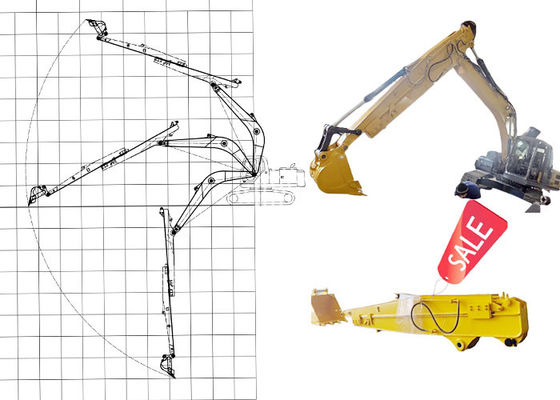
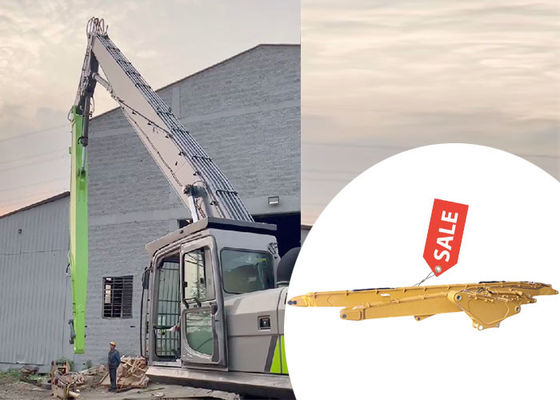
Long Reach Arm: This is a modified working device with a fixed length. It breaks through the standard arm's radius limit by adding specialized extension sections (extended boom, extended stick, or both). It is typically configured in two-piece, three-piece, or four-piece setups, with a relatively fixed structure.
2. Operational Flexibility
Telescopic Arm: Offers extremely high flexibility. Operators can adjust the digging radius, depth, and loading height on the go. Additionally, it can cross small ditches, steps, and other obstacles to perform direct loading and unloading operations.
Long Reach Arm: Has a fixed operating radius. Once installed, its working range is set and cannot be dynamically adjusted during operation like a telescopic arm.
3. Application Scenarios
Telescopic Arm: Ideal for foundation pit construction in confined spaces, deep pit operations requiring flexible depth adjustments, and river dredging. It has distinct advantages in scenarios that require crossing obstacles for loading/unloading or clearing ditches.
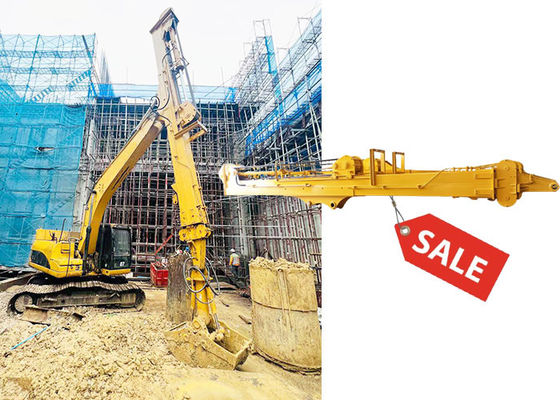
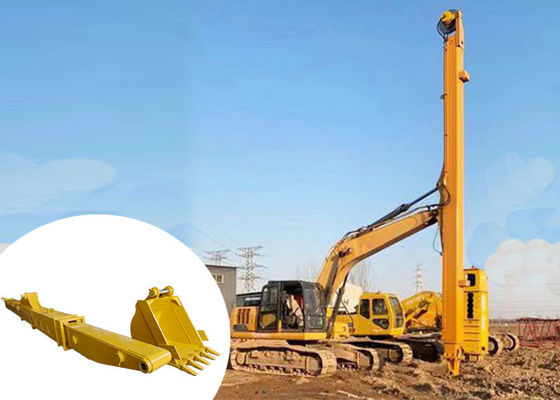
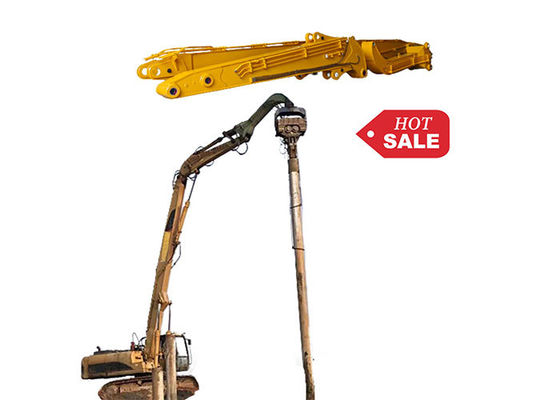
Long Reach Arm: Better suited for large-scale, fixed-distance operations. For example, two-piece long reach arms are commonly used for river dredging and subway excavation; three-piece long reach arms (with middle arm protection) are specifically designed for building foundation.
4. Performance, Pros, and Cons
Telescopic Arm:
Pros: Highly flexible, capable of crossing obstacles, and maintains a larger load-bearing capacity at smaller extensions.
Cons: Relatively complex structure, higher manufacturing costs, and some internal telescopic arms may have limited lifting heights during operation.
Long Reach Arm:
Pros: Can achieve greater height, depth, and distance (e.g., three-piece arms offer higher lifting and demolition heights); significantly higher efficiency for long-distance operations.
Cons: Due to the long and heavy arm, it has high inertia, making operation more difficult and requiring higher precision. The extended lever arm typically reduces digging force, while manufacturing costs, maintenance costs, and fuel consumption are also higher.
Summary: If the project requires flexible depth adjustments in confined spaces or crossing obstacles, the telescopic arm is the better choice. If the project involves fixed-distance dredging, large-scale deep excavation, or high-rise demolition with strict distance and height requirements, the long reach arm is more suitable.