The Dynamic Duo of Telescopic Booms: The Function of Hydraulic Cylinders and Steel Wire Ropes in Extension and Retraction
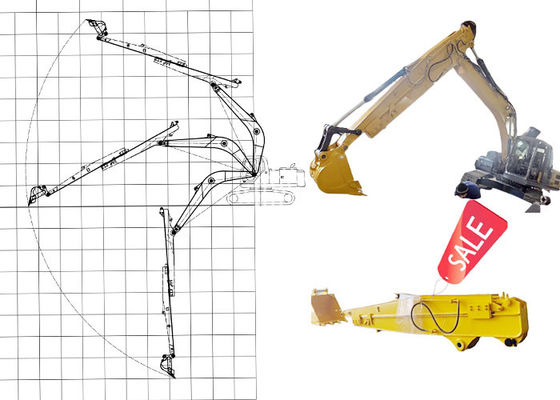
In the heavy machinery industry, the telescopic boom stands as a marvel of modern engineering, allowing cranes and excavators to reach unprecedented heights and distances. But what is the secret behind this seamless extension and retraction? The answer lies in a highly synchronized mechanical ballet performed by two critical components: the hydraulic cylinders and the steel wire ropes. Understanding how these two elements work in tandem is essential for anyone looking to master heavy equipment operation, maintenance, or engineering.
The Powerhouse: The Role of Hydraulic Cylinders
At the heart of the telescopic boom's movement is the hydraulic cylinder, which acts as the primary power source. Based on Pascal’s Law, the cylinder converts fluid pressure into linear mechanical force. In a typical multi-section boom, high-pressure hydraulic oil is pumped into the cylinder, pushing the piston outward.
Interestingly, telescopic cylinders are designed with nested stages. During extension, the hydraulic pressure first acts on the largest piston area, pushing the base section outward. As the pressure continues, it sequentially pushes the smaller, nested stages, creating a cascading extension effect. This design provides immense pushing force at the base while allowing for a longer overall stroke without requiring an impossibly long cylinder. In some advanced setups, a single hydraulic cylinder is combined with a rope system to drive multiple boom sections simultaneously, maximizing efficiency and reducing the overall weight of the boom.
The Conductor: The Role of Steel Wire Ropes
While the hydraulic cylinder provides the raw muscle, the steel wire ropes act as the mechanical conductor. In many telescopic boom designs, particularly those utilizing a "single-cylinder, multi-rope" system, the ropes are responsible for translating the cylinder's movement to the upper boom sections.
When the hydraulic cylinder extends, it pulls the steel wire ropes, which are routed through a complex system of pulleys and sheaves attached to the inner boom sections. This pulley system acts as a mechanical multiplier, ensuring that the second, third, and subsequent boom sections extend in perfect synchronization with the base section. Conversely, during the retraction process, the hydraulic cylinder pulls the ropes back, guiding the outer sections smoothly back into the base boom. The steel wire ropes are engineered to withstand extreme tensile loads and repetitive bending, making them indispensable for maintaining structural integrity and precise alignment.
Synergy in Motion: Why the Combination Matters
The true genius of the telescopic boom lies in the synergy between these two components. The hydraulic cylinder offers smooth, controllable, and powerful actuation, while the steel wire ropes provide a lightweight, space-saving method to distribute that force across multiple boom sections. This combination allows for a compact retracted length and an exceptionally long extended reach.
Furthermore, this dual-system approach enhances safety and operational precision. Modern cranes often integrate sensors to monitor the tension in the wire ropes and the pressure in the hydraulic cylinders, ensuring that the boom extends evenly and preventing dangerous asymmetrical loading.
Conclusion
The extension and retraction of a telescopic boom are not merely about pushing metal tubes; they are the result of a meticulously engineered partnership between hydraulic fluid dynamics and mechanical tension. The hydraulic cylinder provides the unstoppable force, while the steel wire ropes and pulley systems provide the precise control. For operators and engineers, appreciating this dynamic duo is the first step toward safer, more efficient, and more effective heavy lifting.
Whatsapp: wa.me/+8613822325403
Email: aria@excavatorlongarm.com
Website link: www.excavatorlongarm.com


 Your message must be between 20-3,000 characters!